

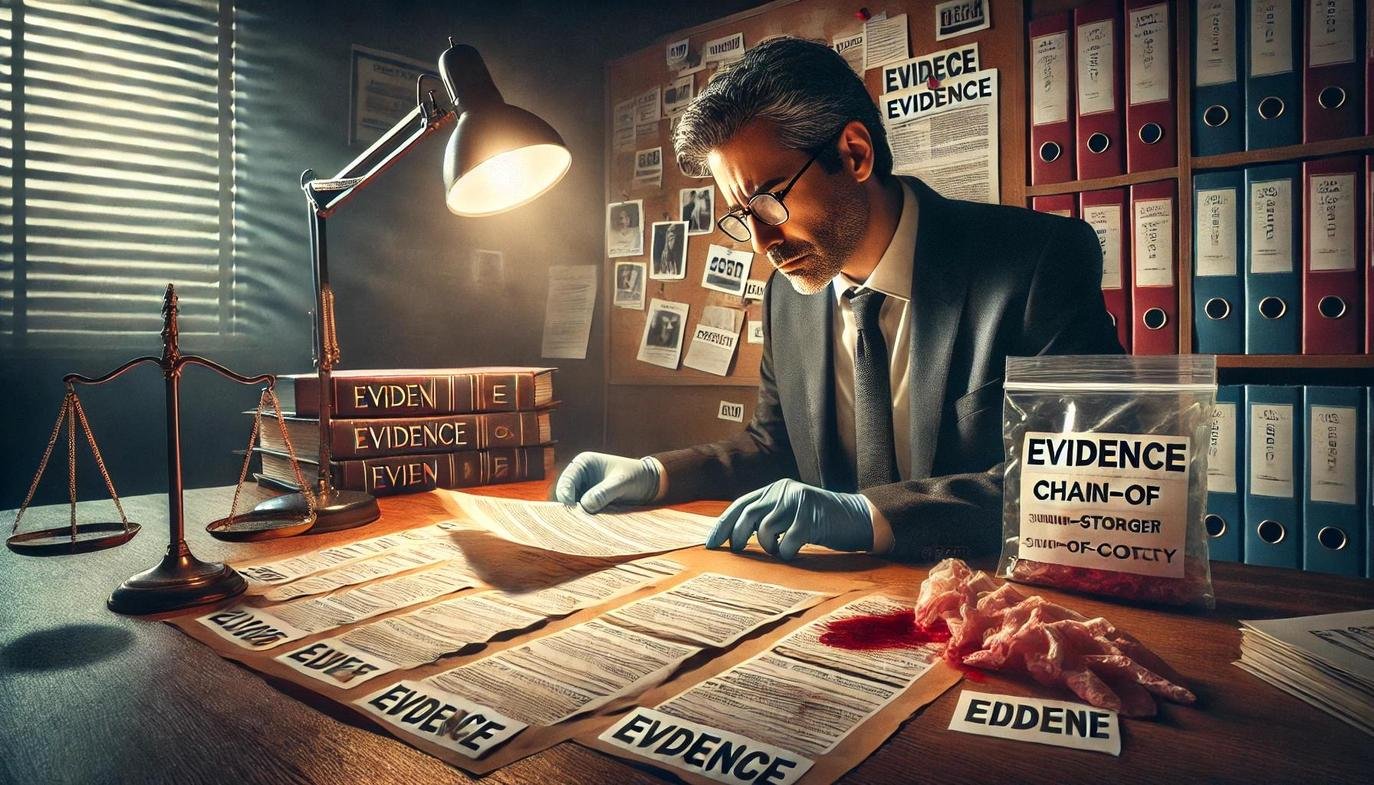
Michigan’s criminal justice system, like many across the nation, is designed to protect both society and the rights of individuals facing charges. Yet navigating this system can be overwhelming, especially when a case hinges on evidence that may be incomplete, inconsistent, or improperly collected. In Michigan, criminal defense lawyers play a critical role in ensuring that every piece of evidence is thoroughly examined and challenged when necessary. From scrutinizing how law enforcement obtained materials to evaluating the credibility of witnesses, defense attorneys leave no stone unturned.
They understand the importance of procedural compliance, forensic reliability, and investigative thoroughness, using these insights to build a compelling defense. By highlighting weaknesses or errors in the prosecution’s case, they can create reasonable doubt and protect clients from wrongful convictions. For those seeking expert guidance in this process, Christensen Law demonstrates how skilled defense attorneys strategically challenge weak evidence while safeguarding constitutional rights.
Scrutinizing the Source
Defence lawyers ask how authorities obtained the evidence, whether they followed the right procedures to do so, and if some protocol was breached. Through the chain of custody, they can find errors or even mishandling that can hurt reliability. Whether or not law enforcement took notes with each step leaves the door open for questioning the authenticity.
Challenging Witness Credibility
Witnesses could comprise a major portion of many cases. Defense lawyers weigh the credibility of witnesses. They try to detect whether a statement is inconsistent, identify possible motivation to deceive, and call out bias.
Identifying Flaws in Forensic Techniques
A jury’s mind is frequently swayed by scientific analysis. But then again, not all forensic techniques hold equal value. They can uncover the flaws in tests that seem objective but lack scientific agreement by consulting independent specialists.
Highlighting Gaps in the Investigation
In some cases, police investigations fail to answer important questions. Defense attorneys call out any gaps in the story, lack of evidence, or incomplete documentation. They may question why certain leads were never followed or why certain key evidence was never collected (or lost). This disconnect can lead to reasonable doubt and give a potential defendant the ability to mount a defense against the case.
Exposing Procedural Errors
Evidence collection must follow strict legal procedures. If, for example, police conduct a warrantless search or fail to read a person their rights, that evidence may be barred in court. Defense attorneys meticulously examine every step to ensure authorities comply with legal requirements.
Questioning the Interpretation
Even if the facts themselves are undisputed, their interpretation can be challenged. Defense attorneys provide alternative explanations for fingerprints, footprints, or other physical evidence, encouraging jurors to critically evaluate the prosecution’s claims.
Using Expert Testimony
Experts from various fields can clarify technical or scientific evidence. Defense attorneys rely on these professionals to explain errors in lab tests, limitations of eyewitness memory, or issues with surveillance footage, helping the jury understand whether the evidence truly supports the prosecution’s case.
Presenting Alibi and Contradictory Proof
The prosecution’s case is severely weakened by a good alibi or any conflicting information. This kind of documentation offers an alternate narrative, calling into question the veracity of the original investigation.
Emphasizing the Burden of Proof
In criminal trials, the prosecution must prove guilt beyond a reasonable doubt. Defense attorneys remind jurors that suspicion alone is not enough to convict, reinforcing the high standard required to secure a conviction.
Conclusion
One of the most important duties that a criminal defense attorney has is to challenge the lack of evidence. This effort helps protect an innocent person from being punished for a crime they did not commit while maintaining the integrity of the criminal justice system. They are relentless in checking every detail and requiring verifiable facts so that only the strongest cases are forwarded.