

Key Takeaways
- The right patch depends on the hat style, artwork, attachment method, and how the hat will be used.
- Raised rubber-style patches can suit bold graphics and active use, while embroidered and woven patches offer classic texture and fine detail.
- Outdoor headwear should be chosen for coverage, comfort, fit, and airflow, not decoration alone.
- Patch size, placement, contrast, and edge finish all affect readability and wearability.
- Testing one finished sample before placing a large order can prevent expensive mistakes.
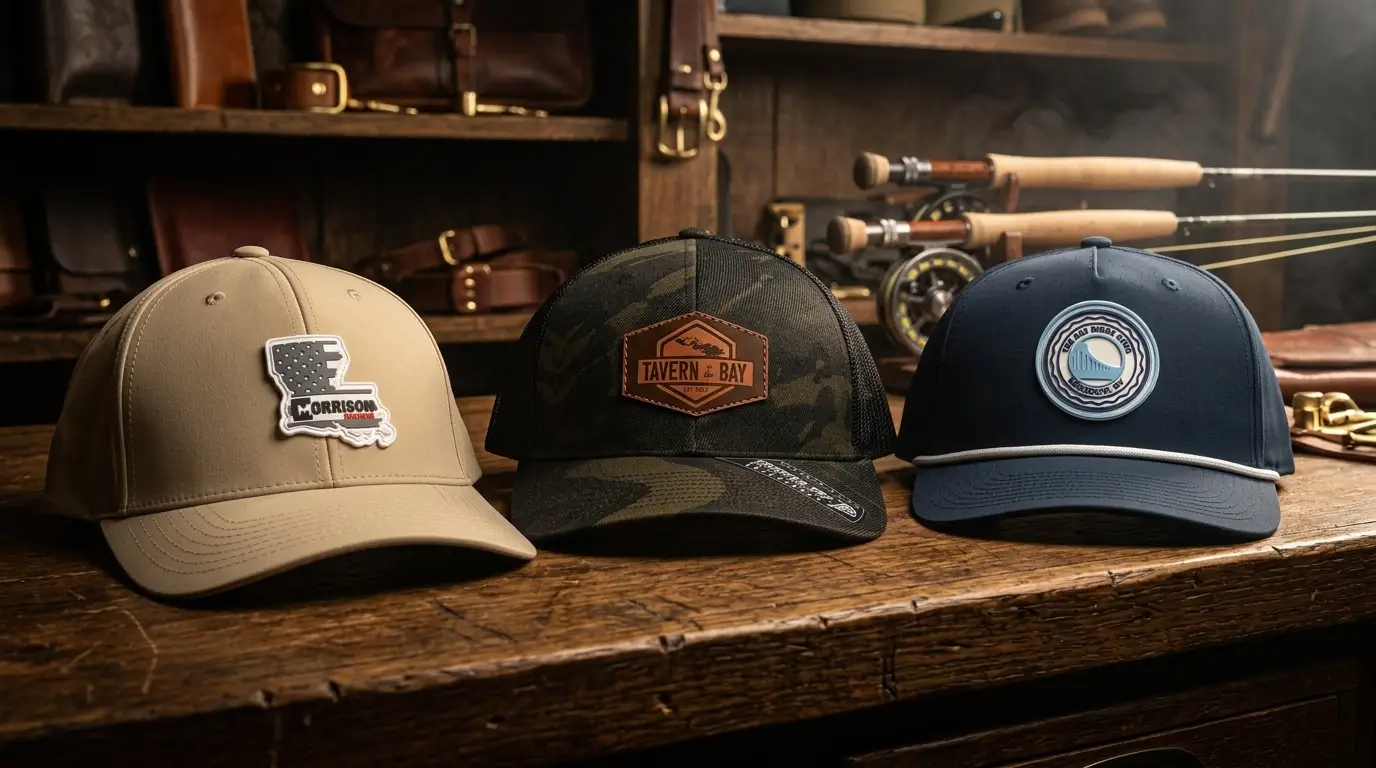
A hat patch should do more than display a logo. It needs to suit the cap’s shape, the wearer’s activity, and the conditions it will face. Whether you are outfitting a construction crew, a tournament team, an outdoor club, or a retail collection, custom rubber patches for hats are one option among several materials to compare.
The best choice is rarely the flashiest option in a catalog. A patch that looks sharp on a firm, structured cap may feel awkward on a soft unstructured hat. Likewise, a detailed event design may not remain clear when reduced to a small front patch. Starting with the real use case makes the design process more practical.
Why the Use Case Should Come First
A patch intended for a one-day event has different demands than one placed on hats worn every workday. Sweat, rain, dust, repeated bending, storage, and frequent handling can all influence how a hat and its decoration look over time. Consider a tournament cap to wear for a weekend versus an outdoor work cap for changing weather. The second hat needs a design that remains comfortable, readable, and appropriate for daily use.
Think about where the hat will go, how often it will be worn, and whether it may be cleaned. Those answers should guide the patch material, size, placement, and attachment method before artwork is finalized.
Start With the Hat Style
Structured caps, snapbacks, and many fitted caps have firmer front panels that can support thicker or more dimensional patches. Unstructured caps have a softer crown and may look better with lighter, flatter decoration. Trucker hats introduce mesh panels, knit hats stretch and flex, and curved crowns can change how a large rectangular patch sits on the head.
Quick Hat Checklist
- Is the front panel firm enough for the planned patch?
- Will the hat often bend, fold, or stretch?
- Would the patch cover eyelets, mesh, seams, or ventilation areas?
- Can the fabric safely handle the intended attachment method?
- Will the patch remain comfortable against the crown?
Match Patch Materials to Daily Wear
- Rubber or PVC-style patches: These work well for bold symbols, raised elements, and modern graphic treatments.
- Embroidered patches: A familiar option for uniforms, clubs, teams, and designs where visible thread texture supports the look.
- Woven patches: Useful when artwork needs smaller lettering, finer lines, and a flatter finish.
- Leather patches: Often chosen for heritage, lifestyle, outdoor, and craft-oriented designs.
- Printed patches: Helpful for illustrations, gradients, photographic elements, or artwork with many colors.
No material is automatically best. A simple, high-contrast logo may work across several patch types, while a fine illustration may require a flatter method that preserves its detail.
Choose Between Sewn-On and Heat-Applied Options
Sewn-on patches create a visible border and a traditional finish. They can be a practical choice when the hat fabric, seams, and construction allow stitching. Heat-applied options can provide a smoother appearance and support custom silhouettes with fewer visible stitches, but the cap material must tolerate the application process.
- Sewn-on: Best when a stitched border supports the visual style and the hat can be sewn without affecting its fit or structure.
- Heat-applied: Best when a clean edge, low-profile appearance, or unusual shape is the priority.
Mesh, soft knits, and very thin fabrics deserve extra attention. Always confirm the attachment method on a sample rather than assuming that one process works for every cap.
Design for Readability From a Distance
Work and sports hats are often seen from several feet away, so the strongest designs usually use simple shapes, clear contrast, and limited small text. Thin lines and tiny lettering can become difficult to recognize once the artwork is reduced to its final patch size.
- View the artwork at the actual finished dimensions.
- Look at it from several feet away.
- Check it against the real hat color, not only a screen background.
- Review it in bright light and in low light.
- Remove details that do not remain clear.
Consider Sun, Heat, and Outdoor Comfort
A patch does not make a hat sun-protective by itself. Coverage, fabric, weave, brim shape, fit, and airflow are separate decisions. The CDC’s sun-safety guidance notes that a brim that extends all the way around provides more coverage for the face, ears, and the back of the neck than a standard baseball cap.
For outdoor crews and clubs, follow workplace rules and choose additional protection that suits the task. A baseball cap can still be useful for team identity and eye shade, but it may leave exposed areas that need additional sun protection.
Pick a Size That Fits the Crown
An oversized patch can crowd the front of a cap, cross seams, or make a soft crown feel stiff. A patch that is too small may lose its wording and visual impact. Leave visible space around the design so it looks intentional rather than forced onto the hat.
- Does the patch follow the curve of the crown without puckering?
- Will the brim, front seam, or eyelets interfere with placement?
- Can the wearer still store, fold, and clean the hat normally?
- Does the patch remain centered when the cap is worn?
Match the Patch to the Audience
- Work crews: Prioritize clear identification, durable-looking finishes, and legible lettering.
- Sports teams: Coordinate colors with uniforms and select a design that holds up visually through repeated wear.
- Outdoor clubs: Account for dirt, weather, water exposure, and the character of the activity.
- Events: Use memorable shapes and colors, while keeping the hat comfortable enough to wear afterward.
- Retail collections: Focus on texture, finish, and how naturally the hat fits into a buyer’s wardrobe.
Use Baseball Cap Design Basics to Guide Placement
On many caps, the front crown is the primary decoration area. A baseball cap’s rounded crown and forward-projecting bill influence how a patch appears from the front and side. Centered placement is a reliable choice for a main logo, while side placement can work for a smaller secondary mark.
Keep important lettering away from center seams, eyelets, closures, and sharply curved areas. Before approval, place a full-size paper or digital mockup on the actual hat model to check proportion and alignment.
Build a Simple Pre-Order Testing Plan
- Check the artwork: Confirm colors, spelling, line thickness, and final dimensions.
- Review the hat: Inspect the crown structure, fabric, seams, and patch location.
- Test the attachment: Produce one sample before committing to volume production.
- Wear the sample: Use it during normal activity, practice, travel, or outdoor work.
- Inspect the result: Look for lifting edges, loose stitching, discomfort, fading, or unwanted shape changes.
- Adjust before ordering: Revise the material, size, placement, or attachment method if needed.
Common Mistakes to Avoid
- Choosing a patch based only on appearance.
- Using text that cannot be read at finished size.
- Ignoring the crown’s curve, seams, and structure.
- Assuming every attachment method works on mesh, knits, and soft fabrics.
- Adding too many colors or elements to a small patch.
- Skipping a sample for a large order or high-use application.
- Forgetting that comfort affects whether people keep wearing the hat.
Final Decision Checklist
- What job will the hat perform?
- How often will it be worn?
- Will it face sweat, rain, dirt, sun, or frequent cleaning?
- Which material keeps the artwork clear and comfortable?
- Which attachment method is best for the cap fabric?
- Is the patch readable at its real size?
- Has a finished sample passed a basic wear test?
Conclusion
The right hat patch begins with the hat’s real purpose. A bold dimensional patch may fit an active outdoor group, while woven or embroidered options may better suit uniforms, clubs, and classic team designs. By evaluating the cap structure, artwork, attachment method, comfort, and expected wear before ordering, you can create headwear that looks intentional and remains useful beyond the first day.