

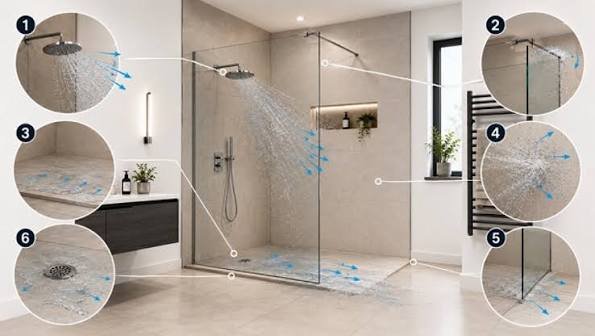
Walk-in showers have moved from luxury upgrade to one of the most requested bathroom changes, especially among homeowners planning to stay in their homes for many years. They look clean and open, they are easier to step into than a tub, and they can make a small bathroom feel larger. Before you take out that tub, here are the questions worth answering.
Who will use the shower, now and later?
Think beyond today. A low or curbless entry removes the step that becomes harder over time. A built-in bench gives a place to sit, and solid blocking inside the walls lets you add grab bars now or years from now without opening the tile again. These features are far easier and less costly to include during a remodel than to add afterward, and when designed well they simply look like good design.
Do you need to keep a tub somewhere?
If you have young children at home or plan to sell soon in a neighborhood full of families, keeping at least one tub in the house is wise. If your home already has a second bathroom with a tub, or the tub in your main bath is mostly used as a place to store bath toys nobody uses, converting it to a walk-in shower is often a smart trade.
Glass, curtain or open entry?
Frameless glass shows off tile and makes the room feel bigger, but it needs regular wiping in areas with hard water. A partial glass panel with an open entry reduces cleaning and works well in larger bathrooms. Shower curtains remain the simplest option for a tight budget or a guest bath. Ask about protective coatings on glass if you have very hard water.
Choosing tile that is safe and easy to clean
Floor tile inside a shower should be slip-resistant, which is why small mosaics are so common: the extra grout lines give feet more grip. Large-format porcelain on the walls means fewer grout joints to scrub. Lighter grout shows mineral deposits less in hard-water areas, and a quality sealer helps it stay clean.
Plan the details: niches, valves and lighting
A recessed niche keeps shampoo bottles off the floor. Placing the shower controls near the entry means you can turn on the water without stepping under a cold spray. A handheld showerhead on a slide bar is helpful for everyone, from rinsing the shower walls to bathing a dog. Good lighting inside the shower area adds safety and makes the space feel finished.
Waterproofing is the part you never see
The most important part of a shower is hidden behind the tile. A properly installed waterproofing system, correct slope to the drain and careful sealing around fixtures are what keep water where it belongs. This is why choosing an experienced installer matters more than any finish you pick.
For homeowners in Surprise, Sun City, Sun City West and nearby communities, Henley’s Floor & Home Pros has been helping families plan bathrooms for over 30 years. Their team handles walk-in shower installation from layout and waterproofing to tile and glass, and their Surprise showroom lets you see tile, fixtures and shower options side by side. They also offer free in-home estimates to measure your bathroom and talk through the best layout.
Ask to see photos of finished showers the team has built, and ask how long a typical conversion takes from demolition to the first shower. Most homeowners are surprised by how manageable the process is when the plan is clear from the start.
Take your time with the decision
A walk-in shower is a change you will use every single day. Take time to visit a showroom, stand inside a few display showers, and picture your morning routine in the new space. The right design will feel natural from the first day and stay comfortable for many years to come.