

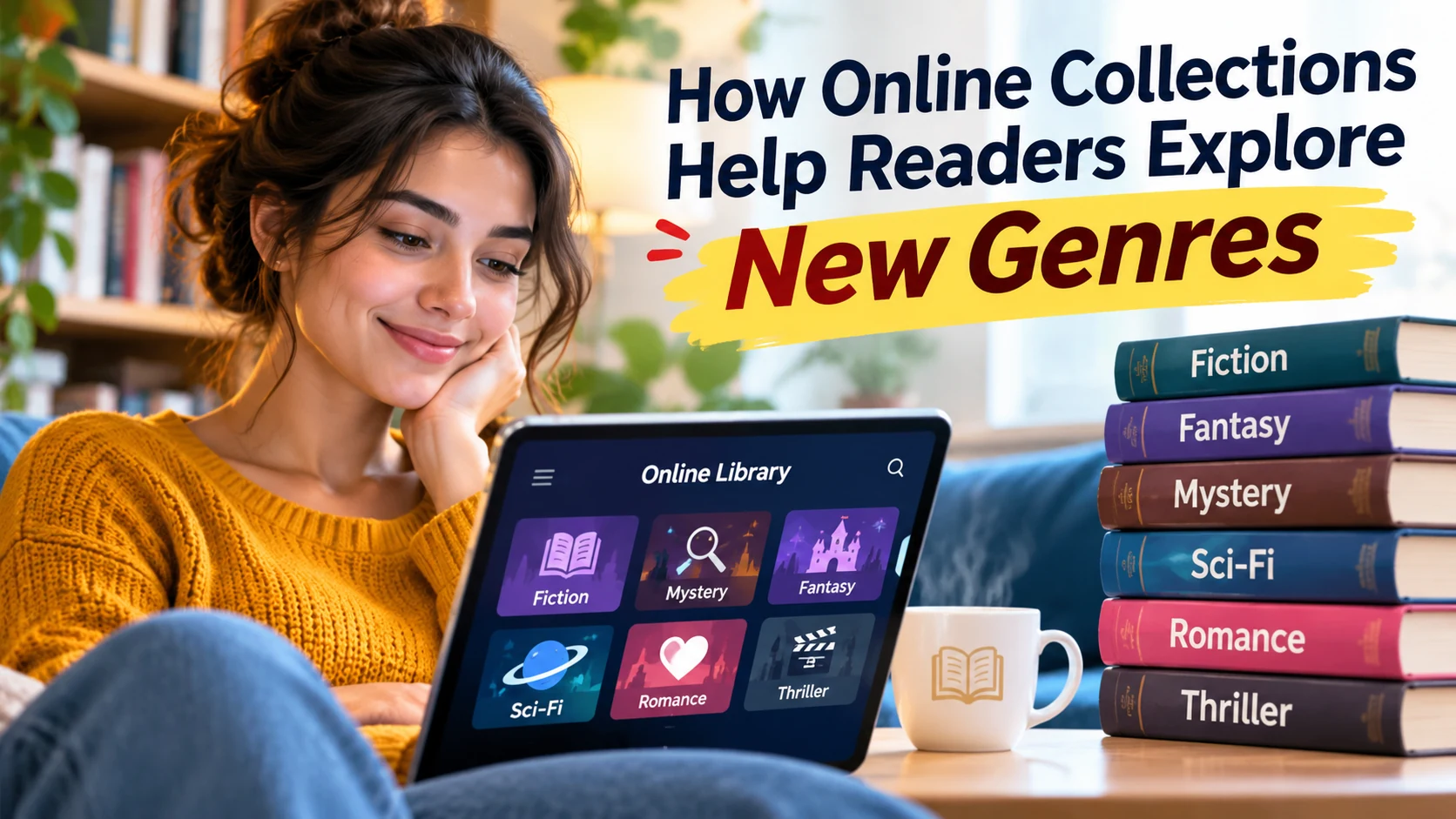
Online collections make genre discovery easier by putting unfamiliar authors, subjects, and related titles in one searchable place. A reader can start with a known interest, then use catalog labels, recommendations, and previews to move into new territory. Services such as Z library also show why access terms must be checked before borrowing or downloading.
Physical shelves and bookstore displays often steer readers toward names they already recognize. Digital collections remove much of that limit. A search for an author, topic, setting, or mood can lead to many related titles, including books that might not appear in a reader’s usual browsing pattern.
Start with an interest rather than a formal genre name. Someone who usually reads historical fiction might search for “political intrigue,” “medieval cities,” or “family saga” and encounter historical mystery, literary fiction, or narrative nonfiction. A reader interested in space travel could move from science fiction into popular science, futurism, or memoirs by astronauts.
Catalogs connect books through metadata, but their systems differ. Subject headings may be assigned by librarians, publishers, or platform staff, while recommendation links often reflect similar titles, user activity, or available catalog data. If results are poor, try synonyms, alternate subject headings, and more than one classification for a known title.
Use catalog tools to find unfamiliar genres
Genre labels vary between catalogs. One collection may classify a quiet supernatural novel as fantasy, while another places it under literary fiction, horror, or magical realism. Search terms should describe the book’s features as well as its expected category.
Try themes, settings, historical periods, character types, or stylistic terms. Searches such as “unreliable narrator,” “small-town mystery,” “climate fiction,” “workplace memoir,” or “short essays on nature” can reveal books without relying on one disputed label.
Filters can narrow results by language, format, date, length, or availability. Related-title suggestions can extend the search after a promising book appears. An online catalog such as Zlib is one example readers may encounter, but its current access terms, copyright position, and compliance with local law should be checked independently.
A “Free library” label needs careful reading. Free to browse, free to borrow, and free to download are different arrangements.
Test recommendations before settling on a new genre
Recommendation links can create a gradual route from familiar reading to something less predictable. A reader who enjoys detective stories might follow suggestions toward legal thrillers, investigative journalism, psychological suspense, or true-crime history.
Platform behavior varies with its design and the data available. Some systems may repeat established preferences, so one space opera can lead to more space operas instead of a genuinely new category. Deliberate searches and filters can widen the results.
Before committing time to a full book, read the catalog description and inspect a sample chapter when one is available. Reviews may clarify pacing, tone, narration, and subject matter, but metadata, reviews, and previews can each be incomplete or misleading. Compare more than one signal. A preview in an e-library may reveal issues that a short promotional description hides.
Check access terms before choosing a source
A listing does not automatically mean that a title is legally available for unrestricted borrowing or downloading. Access depends on copyright status, the provider’s license, lending limits, account requirements, and the reader’s jurisdiction. A public-library loan, a public-domain copy, a licensed e-book, and an unrestricted download carry different permissions.
Use the collection type as a first clue. Library interfaces commonly issue time-limited loans; publishers and booksellers may sell or license copies; public-domain repositories may offer files without a loan period. DRM can restrict copying or opening a file outside an approved app. Regional availability may also differ.
Choose a theme, browse an unfamiliar category, follow related titles, and preview two or three candidates. Then compare the listing with a public library, publisher, bookseller, or other authorized source. Check the loan period, account requirements, app or device limits, DRM, and regional access. After a loan expires, the file may stop opening or return automatically, depending on the service.
Readers comparing services, including Z lib, should review the provider’s current access conditions rather than assuming that a catalog entry grants permission to download. “Free books” can mean public-domain works, library loans, promotional editions, or material offered under different licensing terms. Those distinctions determine what the reader may lawfully save, share, or keep.