

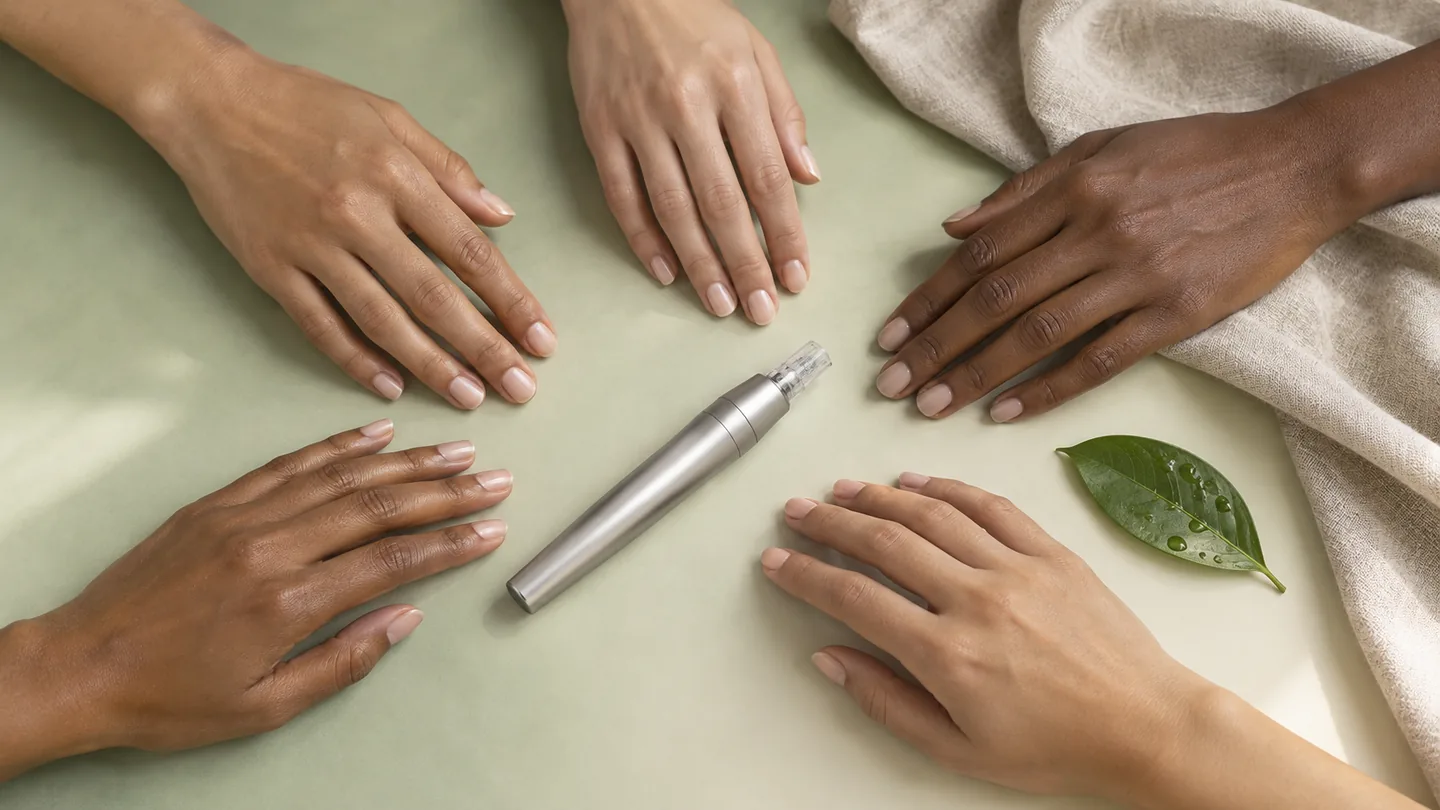
One of the most common concerns among patients with deeper skin tones is whether a skin treatment will trigger pigmentation problems instead of solving them. It’s a fair worry: many resurfacing treatments carry real risk for melanin-rich skin. Microneedling, however, is widely considered one of the safest collagen-stimulating treatments available across the full Fitzpatrick scale, including skin types IV through VI.
Why Microneedling Works Differently Than Laser Treatments
Most of the pigmentation risk associated with skin treatments comes from heat. Lasers and light-based devices work by targeting pigment or heating the skin’s surface, and in darker skin, that heat can overstimulate melanocytes, leading to post-inflammatory hyperpigmentation (dark patches) or, less commonly, hypopigmentation (light patches). This is why many light-based treatments require caution, lower settings, or are avoided altogether in darker skin tones.
SkinPen Microneedling in Philadelphia takes a fundamentally different approach. Instead of using heat or light, SkinPen creates controlled, mechanical micro-channels in the skin. These micro-injuries trigger a natural wound-healing response that stimulates collagen and elastin production, without directly targeting melanin or pigment at all. Because the mechanism doesn’t rely on heat, the risk of triggering pigment-related side effects is significantly lower than with most laser or light-based alternatives.
What Makes It Safer for Melanin-Rich Skin
A few specific factors explain why microneedling has a strong safety profile across skin tones:
● No chromophore targeting. Lasers and IPL devices are often designed to target specific colors, like pigment or hemoglobin, which puts melanin at risk of being caught in the crossfire. Microneedling doesn’t target color at all.
● Mechanical, not thermal, stimulation. Collagen induction happens through controlled physical micro-injury rather than heat, which removes the main trigger for pigment-related complications.
● Even stimulation across skin layers. Because the device creates uniform micro-channels regardless of pigment concentration, melanin-rich areas aren’t treated any differently than lighter areas of the same skin.
● Customizable depth. Providers can adjust needle depth by treatment area, which allows for a more conservative approach on skin that may be more reactive, without compromising results.
What the Evidence and Clinical Experience Show
Dermatology literature and clinical experience both support microneedling’s safety across skin tones. Unlike ablative lasers or aggressive chemical peels, microneedling has a low reported incidence of post-inflammatory hyperpigmentation when performed correctly, and it’s frequently recommended as a go-to option for patients who have been told other resurfacing treatments are too risky for their skin type.
That said, “safe” doesn’t mean “risk-free for everyone, regardless of technique.” Outcomes still depend heavily on the provider’s experience, the pressure and depth used, and proper aftercare. Overly aggressive treatment or poor aftercare can still trigger inflammation in any skin tone, which is why working with a trained provider matters more than the treatment itself.
How to Minimize Risk During Treatment
Patients with darker skin tones can further reduce any residual risk by taking a few precautions:
● Choose a provider experienced in treating diverse skin tones, not just familiar with the device.
● Avoid sun exposure and active skincare ingredients (retinoids, strong acids) in the days before and after treatment.
● Follow aftercare instructions closely, especially around sun protection, since inflamed, unprotected skin is more reactive regardless of treatment type.
● Start conservatively. A lighter initial session lets the provider gauge how your skin responds before increasing depth or intensity.
The Bottom Line
Microneedling is one of the more inclusive options in aesthetic medicine when it comes to skin tone safety. Because it works mechanically rather than thermally, it avoids the main risk factor that makes many laser and light-based treatments more complicated for melanin-rich skin. The best outcomes still depend on proper technique, a qualified provider, and realistic expectations, but for patients who’ve been told their skin tone limits their options, microneedling is often one of the safest paths to real improvement.
Individual results vary. A consultation with a qualified provider is the best way to find out whether this treatment is right for your skin.
FAQs
Can microneedling cause dark spots on darker skin?
It’s uncommon when performed correctly. Because microneedling doesn’t target pigment directly, the risk of triggering post-inflammatory hyperpigmentation is lower than with heat-based treatments. Risk increases mainly with overly aggressive technique or poor aftercare, such as unprotected sun exposure after treatment.
Is microneedling better than laser treatments for darker skin?
For many patients, yes. Laser and light-based treatments target pigment or use heat, which carries a higher risk of pigment disruption in melanin-rich skin. Microneedling’s mechanical approach sidesteps that risk, making it a more broadly suitable option across skin tones.
Do I need a specialist for microneedling if I have dark skin?
You don’t need a specialist exclusively for dark skin, but you should choose a provider with real experience treating diverse skin tones. Technique, depth, and aftercare guidance matter more for outcomes than the device itself.
Will microneedling lighten or darken my natural skin tone?
It is not designed to change your natural pigment. Microneedling works by stimulating collagen and elastin production rather than targeting melanin. Any temporary redness following treatment resolves as the skin heals.
How soon can I return to sun exposure after microneedling?
Sun protection is important immediately after treatment, since healing skin is more reactive. Daily broad-spectrum SPF is recommended, and direct sun exposure should be minimized until any redness or sensitivity resolves, typically within a few days.